Costs
How do apps make money? 7 models, with real numbers
How do apps make money? In seven main ways: subscriptions, one-off in-app purchases, paid downloads, in-app advertising, commission on transactions, selling physical goods or services, and charging businesses rather than consumers. Free apps use every model except paid downloads. The right one depends on what your users value and how often they use the app.
This guide explains each model, what Apple and Google take, and what the real numbers say, so you can choose a model before you build rather than bolting one on later.
Where app money really comes from
Most money made through apps isn't from games or subscriptions. A study for Apple found the App Store ecosystem facilitated $1.3 trillion in developer billings and sales worldwide in 2024. Over $1 trillion of that was physical goods and services, such as taxis, food and shopping, and developers paid Apple no commission on more than 90% of the total.

That matters for founders: if your app sells a real-world service, like a dog walk or a class, you can take payment by card without giving Apple a cut. Apple's rules require those payments to go outside in-app purchase.
How do apps make money? The 7 models
| Model | How it works | Store commission? |
|---|---|---|
| Subscriptions | Users pay monthly or yearly for access | Yes, if sold through the app stores |
| In-app purchases | One-off payments for extras, credits or extra features | Yes |
| Paid download | Users pay before installing | Yes |
| Advertising | An ad network pays you to show ads | No |
| Commission | You take a share of transactions between users, like a marketplace | No, for real-world services |
| Physical goods and services | The app is a shop or booking tool for something real | No |
| Business customers | Companies pay for the app for their staff or customers | Usually no, if billed outside the app |
Many apps combine models. A booking app might take commission on bookings and sell a premium subscription to businesses listed on it.
How do free apps make money?
Free apps make money after the download: by showing ads, selling upgrades or subscriptions to some users, taking commission on transactions, or selling real-world goods and services through the app. The download itself earns nothing, so a free app needs a clear moment where some users pay or see ads.
How do free apps make money without ads?
Without ads, free apps usually rely on a paid tier that some users upgrade to (often called freemium), commission from a marketplace, bookings or product sales, or businesses paying to reach or serve the app's users. These work best when the free version is useful on its own and the paid part saves time or adds more.
Subscriptions: what the numbers say
Subscriptions give predictable income, but keeping subscribers is hard. RevenueCat's State of Subscription Apps 2025, based on apps using its platform, found nearly 30% of annual subscriptions are cancelled in the first month. It also found 35% of apps now mix subscriptions with one-off purchases or lifetime deals.
The gap between apps is huge: the same report found the top 5% of newly launched apps make over 400 times as much revenue after two years as the bottom 25%. A subscription only works if people keep getting value, so the first few days in the app matter more than the paywall itself.
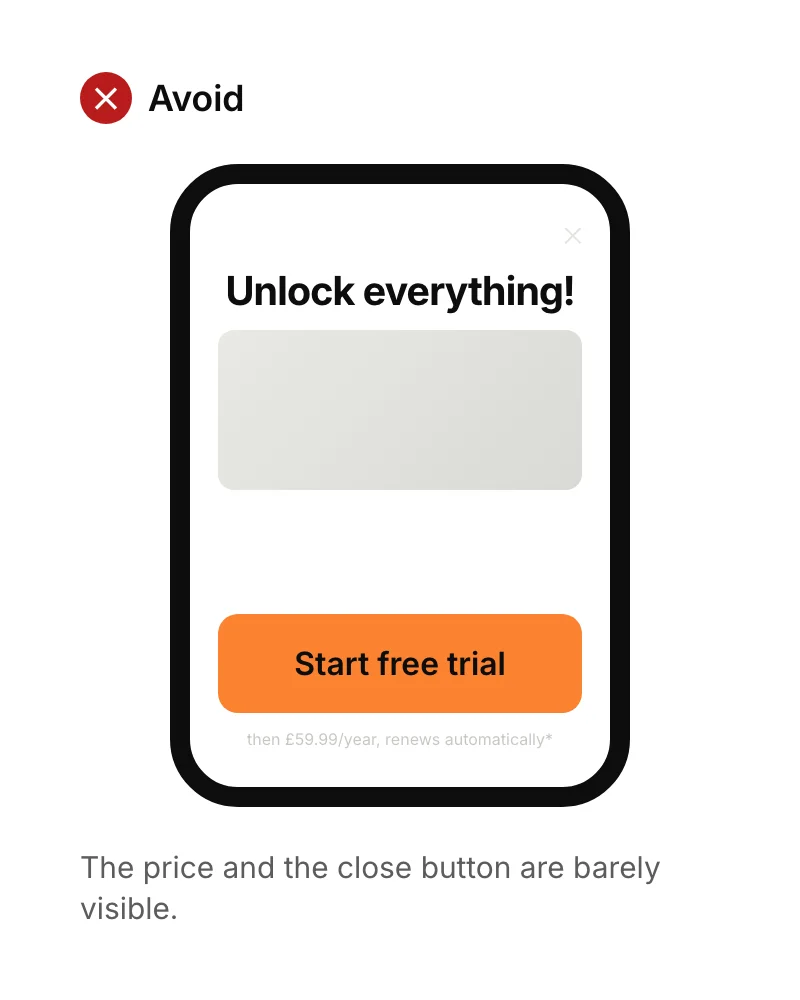
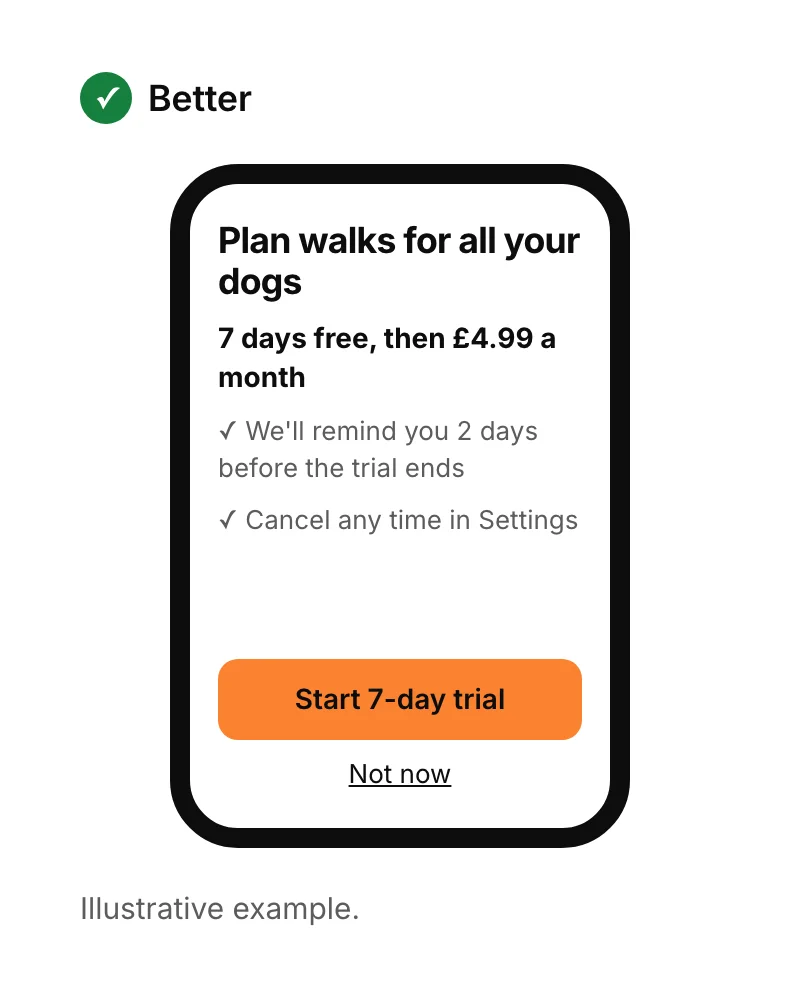
If you sell subscriptions to UK consumers, plan for new rules. The UK government says new subscription rules come into force in January 2027, requiring clearer up-front information, regular reminders, a much easier way to cancel, and a 14-day cooling-off period after a trial or a long-term contract renews.
How much money do apps make per download?
There's no typical figure, because a download is only valuable if it leads to a purchase, subscription or ad views. RevenueCat's 2025 report put the median revenue per install for subscription apps on its platform at $0.31 after 60 days. Many free apps earn nothing from most of their downloads and make their money from a small share of users.
So when you plan, think in paying users rather than downloads. For example, if 3 in 100 users subscribe at £4.99 a month, 1,000 downloads bring in about £150 a month before store fees. That's an illustration, not a benchmark, but it shows why retention matters more than download counts.
What Apple and Google take
Apple and Google take a cut of digital sales made through their stores, and nothing from ads or real-world goods and services. Apple charges 15% for developers earning up to $1 million a year through its Small Business Program, and 30% otherwise. For UK users who installed from 30 June 2026, Google charges 10% plus a 5% billing fee on a developer's first $1 million a year.
Card payments for real-world services go through a payment provider instead, with its own fee per transaction. Our guide to what it costs to make and run an app lists these costs side by side.
How to choose a money model for your app
Choose the model that matches how people get value from your app. Four questions narrow it down:
- Is the value ongoing? If users get value every week, a subscription fits.
- Does money already change hands? If your app connects buyers and sellers, take commission.
- Is it used often but valued lightly? Ads can work, but only at large scale.
- Who has the budget? If businesses benefit most, charge them rather than consumers.
Test the price early, before you build payments. A landing page with a price on it, or pre-orders, tells you far more than asking people what they'd pay. See how to validate an app idea and the MVP development process, or talk to us about building a first version with Flutter.
Sources
- Apple Newsroom, Global App Store helps developers reach new heights, June 2025.
- RevenueCat, The State of Subscription Apps 2025, 14 March 2025.
- Apple Developer, App Review Guidelines and App Store Small Business Program. Checked 15 September 2026.
- Google Play Console Help, Service fees. Checked 15 September 2026.
- GOV.UK, PM starts roll out of 'everyday fixes' on the cost of living, 9 August 2026.