Startup How To
How to protect an app idea in the UK
How to protect an app idea in the UK comes down to this: the idea on its own is hard to protect, so protect everything you create from it. Use non-disclosure agreements where they help, make sure contracts give your company the code and designs, register your app's name as a trade mark, and keep your accounts in your company's name. Moving quickly protects you too.
Can you protect an app idea?
Not directly. In UK law, an idea on its own isn't protected by copyright, trade marks or other intellectual property. What you can protect is what you make from it: the code, designs and text, the app's name and logo, confidential business information, and in rare cases a technical invention.

GOV.UK explains that copyright protection is automatic, with no need to apply or pay, and covers original written work such as software, web content and databases. So as soon as your app's code and designs exist, they're protected. The question is who owns them.
Can app developers steal your idea?
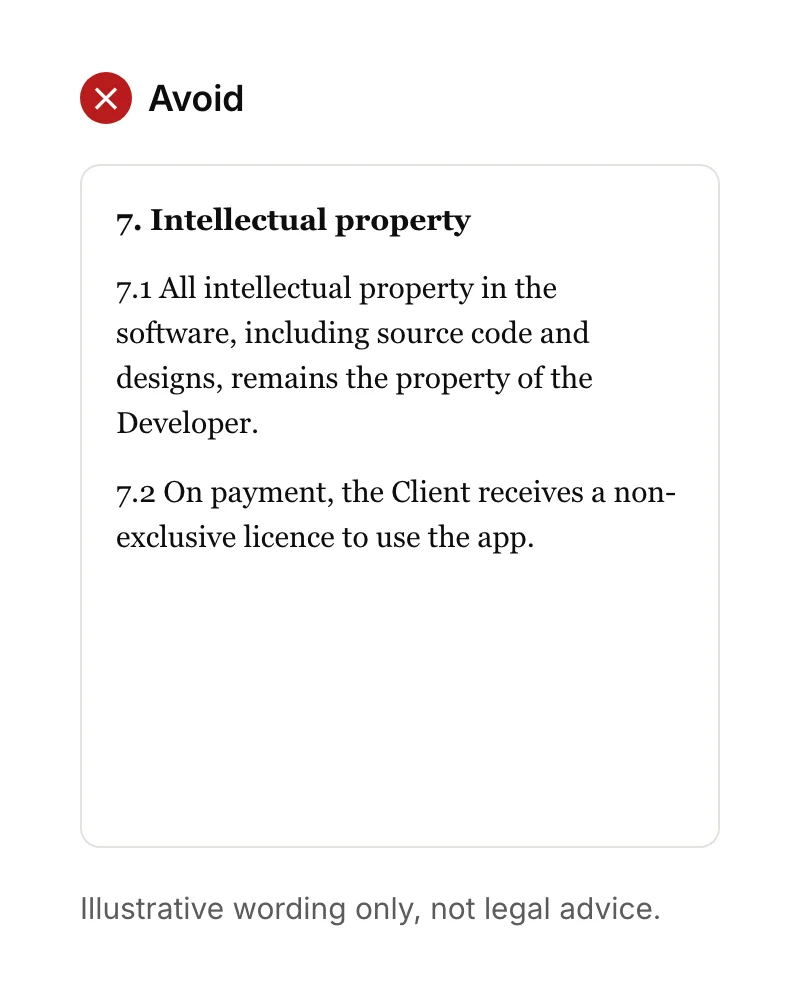
It's possible, but it's rarely the real risk. Established developers depend on their reputation and have more ideas than time. The bigger risk is quieter: if your contract doesn't say otherwise, the developer you pay may own the code they write for you.
Government guidance on copyright ownership says that when you commission someone to create a copyright work, the person who created it is the first legal owner, not you, unless you agree otherwise in writing. That applies to freelancers and agencies alike.
Should you use a non-disclosure agreement?
A non-disclosure agreement (NDA) is a contract where someone promises to keep what you share confidential. It's useful when you share detailed plans, data or unusual technical methods with a developer, partner or potential co-founder. It won't stop someone who independently has the same idea, and it's only as strong as your willingness to enforce it.
Use NDAs for the detail, not the headline. You can describe the problem you're solving to potential users and investors without one, and those conversations are how you validate the idea. Save the NDA for when you share how you'll do it.
How do I protect my app idea once it's being built?
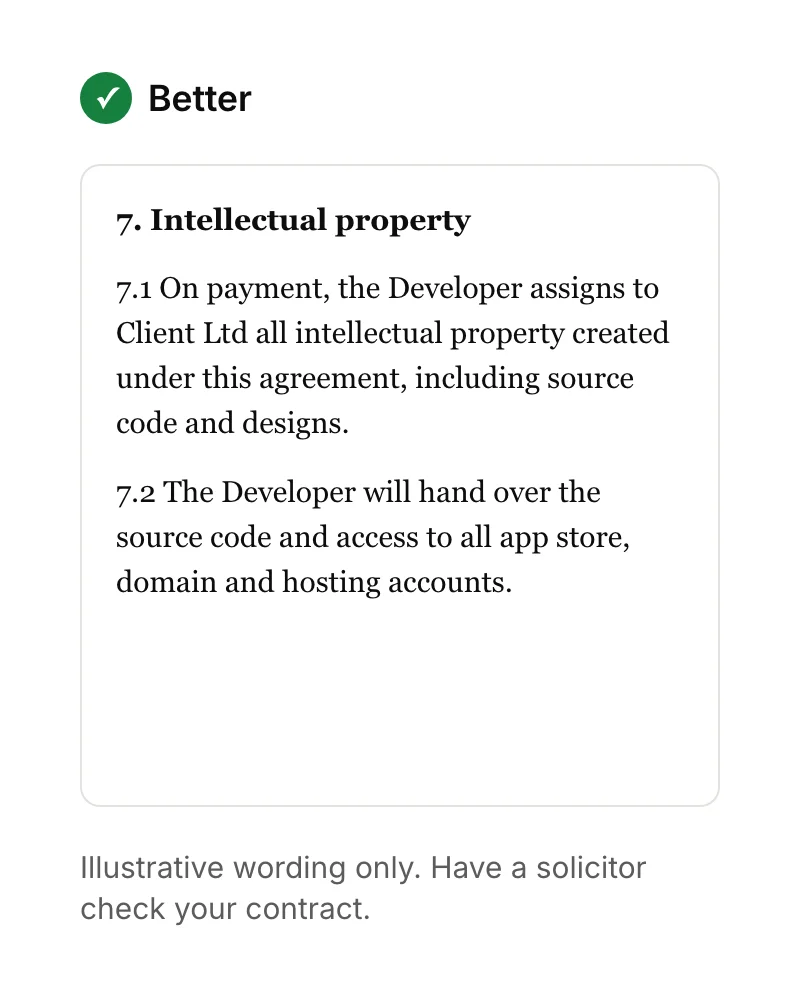
Once the build starts, protect your app idea by making sure your company owns what's created and controls the accounts. Ask for a written assignment of intellectual property, access to the source code, and the App Store, Google Play, domain and hosting accounts registered to your company with the developer invited as a team member.
- Intellectual property assignment to your company, in the contract.
- Source code access, for example a code repository your company owns.
- Developer accounts in your company's name, not the developer's.
- A record of what you shared and when, such as dated documents and emails.
At Ingenious App Studios, once a project is paid for, the code, designs and intellectual property belong to the client. Whoever you work with, our guide to finding an app developer lists the questions to ask before you sign.
Register your app's name as a trade mark
A registered trade mark stops others using your app's name or logo for similar goods or services in the UK. According to GOV.UK, registering one costs at least £205, more if you need several types of goods or services, and usually takes three to four months if there are no problems.
Search first. The UK government's trade mark search shows whether a similar mark already exists. Choosing a name nobody else has registered saves a painful rebrand later. Our guide on how to check if your app idea exists covers name checks alongside competitor research.
How to patent an app idea (and why it's rarely possible)
Most apps can't be patented. UK patent law excludes computer programs "as such", so a patent needs a genuine technical invention, not a new business idea or a way of arranging features. Patents are also expensive and slow, and applying makes the invention public.
If you believe your app involves a real technical invention, such as a new way of processing sensor data, talk to a registered patent attorney before you share the details publicly. For most founders, the time and money are better spent getting to market.
The strongest protection: build it well and quickly
For most apps, the best protection is getting a good product to real users before anyone else does, then improving it faster than a copycat could. Customers, data and reputation are much harder to copy than an idea.
That's the reason behind a small, fast first version: see the MVP development process and how to create an app. When you're ready to build, see how we work on Flutter apps for founders.
Sources
- GOV.UK, How copyright protects your work. Checked 15 September 2026.
- Intellectual Property Office, Ownership of copyright works. Checked 15 September 2026.
- GOV.UK, Register a trade mark: apply and Search for a trade mark. Checked 15 September 2026.