Startup How To
I have an app idea but no money: where do I start?
If you've typed "I have an app idea where do I start" into Google, the answer is to prove people want it before you build it. The first three steps cost nothing but time: talk to potential users, check for competitors, and turn the idea into a clickable prototype. Money only matters once you have evidence, and there are more ways to find it than most founders expect.
This guide is for founders with an idea, little or no budget, and usually no coding skills. It follows the order that wastes the least money, and it's honest about which funding routes suit an app and which don't.

I have an app idea: where do I start?
Start with the problem, not the app. Write one sentence describing who has the problem and what it costs them today, then test that sentence with real people. An idea that survives ten honest conversations is worth far more to a developer, investor or lender than a detailed feature list.
- Talk to 10 potential users. Ask what they did the last time they had the problem, not whether they'd use your app.
- Check for competitors. Search the app stores and Google using the words customers would use. Competitors usually prove demand exists. Our guide on how to check if your app idea exists shows how.
- Write down version 1. One job for one type of user, and a list of everything that can wait.
Make a clickable prototype for free
A clickable prototype is a set of designed screens linked together so people can tap through your app before any code exists. It's the cheapest way to show your idea, test it with users and explain it to a developer or investor. Design tools such as Figma have a free plan (Figma's is called Starter), which is a good place to begin.
You don't need design skills to learn what matters. Sketch each screen on paper first, build the three or four screens of your main task, then watch a few people try it and note where they get stuck. Our guide to mobile app design covers what makes screens easy to use.
Test demand before you spend
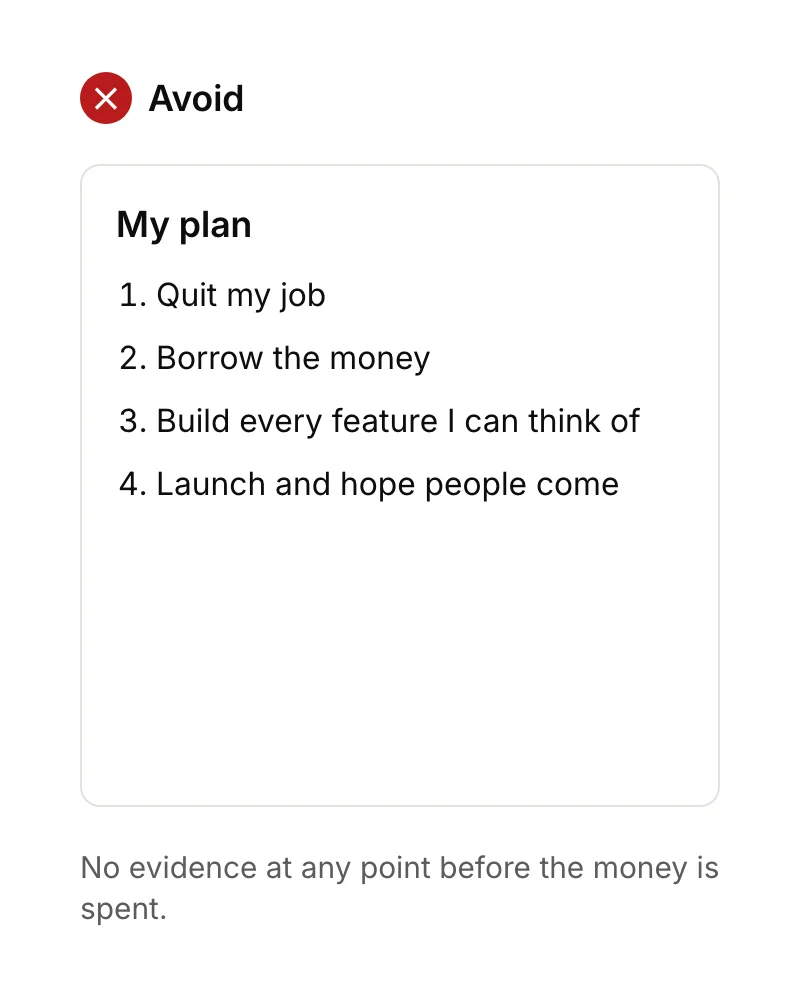
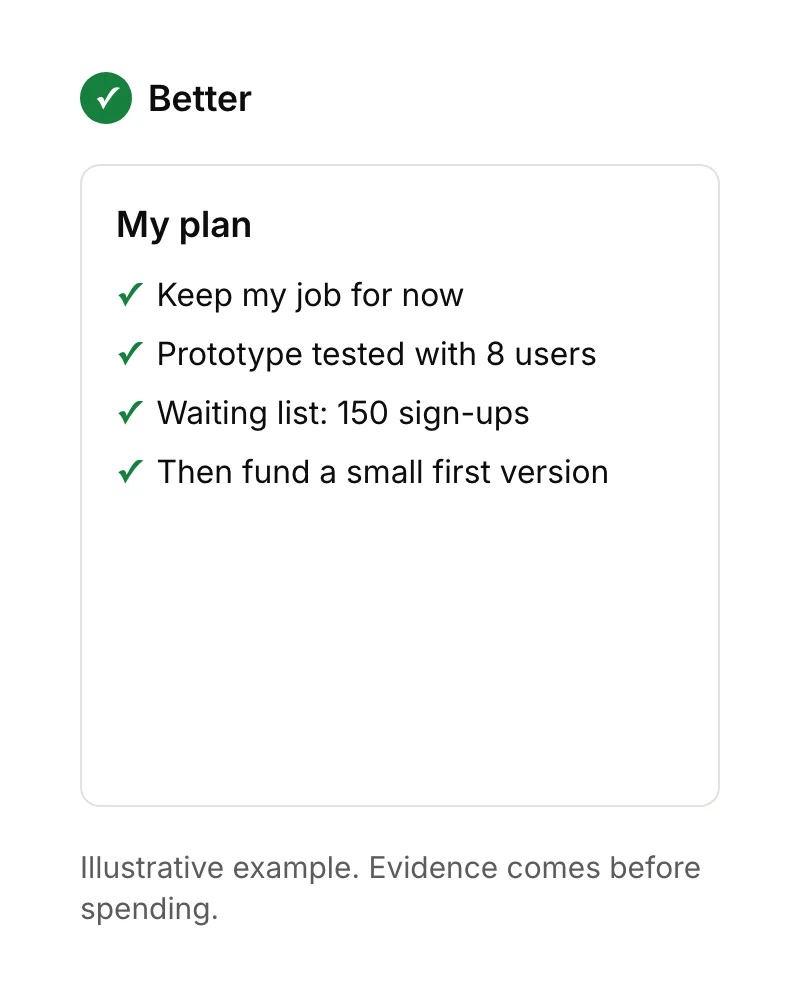
Before spending on development, get people to do something that costs them a little: join a waiting list, pre-order, or pay for the service done by hand. Words are cheap. Sign-ups and payments are evidence you can take to a lender or investor.
- A landing page with a waiting list. One page explaining the benefit, with an email sign-up. See what a landing page is.
- Pre-sales. Offer early customers a discount for paying now.
- Do it by hand. Run the service with WhatsApp and a spreadsheet for a few weeks, then automate the parts people use.
I have an app idea but no programming skills
You don't need programming skills to start an app business. Most founders who can't code either use a no-code tool for an early version, find a technical co-founder, or hire a developer or agency once they have evidence. Each route trades money for time or equity differently.
- Learn a no-code or AI app builder. The cheapest in cash, but it takes your time, and there are limits on custom features and moving off the platform later.
- Find a technical co-founder. No upfront cost, but you give away a real share of the company, so choose as carefully as you would a business partner.
- Hire a developer or agency. The fastest route to a solid first version. See our guide to finding an app developer.
How to fund an app when you have no money
Once you have evidence, the realistic funding routes for a UK founder are savings or side income, friends and family, a government-backed Start Up Loan, angel investors (often using SEIS tax relief), crowdfunding if you already have an audience, and paid pilots with businesses. Grants for early apps are rare.
| Route | What it involves | Watch out for |
|---|---|---|
| Savings or side income | Keep your job and fund a small first version | Slower, but you keep full control |
| Friends and family | Loans or small investments from people you know | Put the terms in writing, and only take what they can afford to lose |
| Start Up Loan | £500 to £25,000 at 7.5% fixed interest from 6 April 2026, repaid over one to five years, with free mentoring | It's a personal loan, so you repay it even if the app fails |
| Angel investors with SEIS | Early-stage companies can raise up to £250,000 under SEIS, and investors can get 50% income tax relief | You give away shares; investors expect evidence of demand |
| Crowdfunding | Pre-orders or small investments from the public | Works best when you already have an audience |
| Paid pilots | A business pays you to build a version for its staff or customers | Make sure you keep ownership of the product |
Rules and rates change, so check the latest terms with the provider before applying, and speak to an accountant about SEIS. Innovate UK says its Smart grants are now closed for new applications, so look for current competitions rather than relying on a grant.
Should you offer developers equity instead of pay?
Offering equity instead of pay rarely works well for a first app. Experienced developers usually want paying, and the ones who accept shares may not stay for the long haul. If you do it, use a proper agreement with vesting (shares earned over time) and make sure the code belongs to your company.
That last point matters. UK government guidance says that when you commission someone to create a copyright work, they're the first owner of the copyright unless you agree otherwise in writing. Our guide on how to protect an app idea covers this in more detail.
Can you sell an app idea?
Selling an app idea on its own is very hard. An idea on its own isn't protected by copyright or other intellectual property, and companies buy products, users and revenue rather than concepts. If you want to sell, build evidence first: a tested prototype, a waiting list or paying pilot customers make an idea worth something.
How much do you need for a first version?
Most people asking "I have an app idea where do I start" also want to know the number. At Ingenious App Studios, a small first version of an app starts from about £5,000, and around £10,000 is typical. Very small apps can be built in four to six weeks. The less version 1 does, the less you need to raise, which is why evidence and a tight scope come first.
For the full breakdown, see how much it costs to make an app and the MVP development process. When you're ready, we give a free quote within 48 hours of a first call, and you can see how we build Flutter apps for founders.
Sources
- Start Up Loans, Changes to interest rate and eligibility criteria. Checked 15 September 2026.
- HMRC, HS393 Seed Enterprise Investment Scheme reliefs (2025). Checked 15 September 2026.
- British Business Bank, What is the Seed Enterprise Investment Scheme? Checked 15 September 2026.
- Intellectual Property Office, Ownership of copyright works. Checked 15 September 2026.
- Figma, Pricing. Checked 15 September 2026.
- UKRI, Smart grants funding guidance. Checked 15 September 2026.